How to plan a crypto portfolio for the next market cycle in 2026
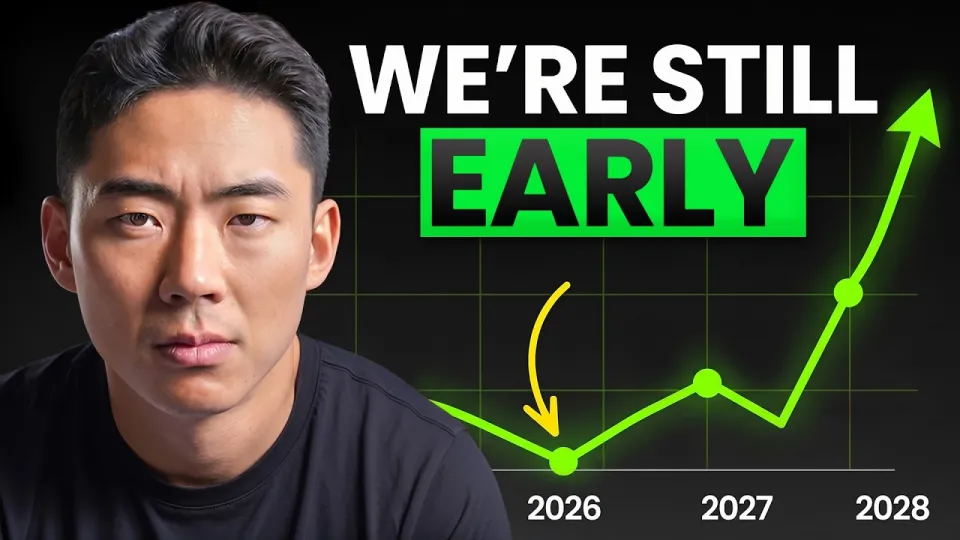
Video: my plan to make millions in crypto 2027
Need articles like this for your video? They help promote it on YouTube and Google — order them in the Telegram bot @sat_sit_bot. It writes articles around your video, embeds the video and publishes them on popular niche websites (no ads). Your first 50 articles are free.
Key takeaways
- Brian Jung's cycle plan frames crypto as a multi-year allocation rather than a single trade, with Bitcoin as the core and altcoins as satellites.
- The main narratives he tracks are real-world asset tokenization, stablecoin payments, AI-linked crypto infrastructure and layer-1 ecosystems such as Sui.
- Regulatory clarity, including the status of the CLARITY Act, is treated as a structural tailwind rather than a guarantee of higher prices.
- Viewer skepticism centers on repeated bullish calls and past losses, so position sizing and risk limits matter more than any single price target.
- The plan is published as educational content, not financial advice; the author's disclaimer states crypto is highly speculative and volatile.
A crypto plan for the next market cycle in 2026 works best as a written allocation framework rather than a price prediction: decide how much of the portfolio goes to Bitcoin as the core, how much to altcoins as satellites, which narratives you are deliberately buying and what would make you exit. Brian Jung lays out exactly this kind of structure in his cycle plan, and the Kaizen Pro product page is where the waitlist and the paid research tier live for readers who want the full breakdown.
Why a written crypto plan beats a price target
The core argument is that nobody can time the top, so the plan has to survive being wrong about timing. Jung's framing is that crypto is a multi-year allocation decision, not a single trade, and the job of a plan is to define the rules before emotion takes over.
A workable version of that plan has four parts:
- Core versus satellites. Bitcoin and, for many investors, Ethereum form the core because they carry the least narrative risk. Altcoins are satellites with a hard cap on total exposure.
- Narrative buckets. Money is split across themes rather than single tokens, so one failed thesis does not sink the portfolio.
- Entry rules. Buying is staged across weeks or months instead of executed in one click at a local high.
- Exit rules. Profit-taking levels and invalidation levels are written down in advance, including what happens if Bitcoin loses a major moving average on the weekly chart.
The reason this matters is visible in the audience reaction. Long-time followers note that bullish crypto calls have been made in every cycle, and some viewers describe losing heavily after following similar optimism in earlier years. A plan does not remove that risk, but it caps how much a wrong call can cost.
The narratives driving the next crypto cycle
Real-world asset tokenization, stablecoin payments, AI-adjacent infrastructure and large layer-1 ecosystems are the themes most likely to attract capital in the next leg. Jung's breakdown groups the market into narratives rather than tickers, because capital tends to rotate between themes before it rotates between individual coins.
- Tokenized real-world assets. Bringing treasuries, funds and private credit on-chain is the clearest institutional use case, and it brings revenue rather than pure speculation.
- Stablecoins as payment rails. Volume growth in stablecoin settlement is one of the few crypto metrics that keeps compounding regardless of price action.
- AI plus crypto. Compute marketplaces, decentralized data and agent payments attract attention, though the sector also carries the most hype risk.
- Layer-1 competition. Ecosystems such as Sui get mentioned as candidates for the next rotation, and viewers specifically flagged that they had been waiting for coverage of it.
- Regulation as a catalyst. Clarity on market structure rules is treated as a tailwind for institutional participation, not as a promise that prices rise.
A practical way to use narratives is to assign each one a maximum percentage of the portfolio and to rebalance when a theme runs far ahead of the rest.
How to size Bitcoin against altcoins in a crypto portfolio
Bitcoin should carry the largest single weight, with altcoins capped at a level you can watch fall 70% without changing your behavior. The common mistake is treating altcoins as a leveraged version of Bitcoin; in practice they add correlation plus extra downside.
A simple structure many long-term holders use:
- 50–70% in Bitcoin and Ethereum as the core position.
- 20–40% spread across three to five narrative buckets, each with its own token or basket.
- 5–10% held in stablecoins as dry powder for drawdowns.
- Zero leverage, or leverage only with a defined liquidation buffer that is far from the current price.
One viewer said the plan is to put half the portfolio into altcoins. That is a legitimate choice, but it should be paired with a rule for taking profits on the way up, because altcoin cycles tend to end faster than Bitcoin cycles.
Typical doubts about bullish crypto calls
The most common doubt is not about technology but about timing: if the same bullish case was made in previous cycles, why would this one be different? The honest answer is that it might not be, which is why the plan has to work even if the cycle top arrives later or earlier than expected.
Other recurring concerns worth addressing directly:
- Regulatory rejection. Some argue that regulators refusing to legitimize crypto is actually better for the asset's original ethos. Either way, policy headlines create volatility that a staged buying plan absorbs better than a single large entry.
- Cycle length. Estimates range from a top in the near term to a peak as late as 2029. A plan built on fixed dates will break; one built on price levels and portfolio weights will not.
- Permanent losses. The strongest skepticism comes from people who lost money following earlier bullish content. That is a reminder that position sizing, not conviction, determines survival.
- Information overload. Paid research groups and newsletters are useful only if they feed a process you already control.
Risk rules that keep a crypto plan intact
Survival is the edge: a plan that limits drawdowns keeps you in the market long enough for a cycle to pay off. Jung's own disclaimer is explicit that crypto is extremely risky and highly speculative, and that no one should invest more than they can afford to lose.
Concrete rules that follow from that:
- Write down the maximum portfolio drawdown you can tolerate, then size positions so a 70% altcoin decline stays inside it.
- Take partial profits at predetermined multiples rather than waiting for a single exit price.
- Keep stablecoin reserves so drawdowns become buying opportunities instead of forced holds.
- Review the plan on a fixed schedule, not every time the price moves.
Links and resources from the breakdown
All official links referenced in the video are collected here for convenience:
- Kaizen Pro waitlist and product page
- Free crypto market report newsletter
- Brian Jung on X
- Brian Jung on Instagram
- Risks and disclaimers document
Conclusion
A crypto plan for the next cycle in 2026 comes down to structure: a Bitcoin-heavy core, capped altcoin exposure across a few narratives, staged entries and pre-written exit rules. Brian Jung's video breakdown is useful precisely because it frames the market as themes and allocation rather than as a single bet, and the audience reaction shows why discipline matters more than optimism. Readers who want the author's full research can join through the Kaizen Pro page. Treat everything here as education, size positions so a bad outcome is survivable, and let the plan, not the price chart, make the decisions.
Questions & answers
Is it too late to build a crypto position in 2026?
No single date decides that, because the plan is built on staged entries and portfolio weights rather than one purchase. If you are starting late, a common approach is to buy the core position in tranches over several weeks and keep a stablecoin reserve for drawdowns. Timing matters less than position size and having exit rules written down.
Should altcoins take half of a crypto portfolio?
That is a valid choice only if you can tolerate a 70% decline in that half without abandoning the plan. Altcoins are correlated with Bitcoin but carry extra downside, so many investors cap them at 20–40% and spread the exposure across several narrative buckets. Partial profit-taking on the way up is what protects the gains.
Does regulatory clarity guarantee higher crypto prices?
No. Clearer market structure rules can bring institutional participation and reduce legal uncertainty, but prices still depend on liquidity, supply and sentiment. Some holders even argue that crypto is better off without heavy bank involvement. Treat regulation as one variable, not a price target.
How long is the current crypto cycle likely to last?
Estimates vary widely, from a peak in the near term to a top as late as 2029, and nobody knows in advance. That uncertainty is why a plan should be based on price levels, portfolio weights and profit-taking rules rather than a fixed calendar date. Reviewing the plan on a schedule keeps you from reacting to every headline.
Source: my plan to make millions in crypto 2027 · Markdown version